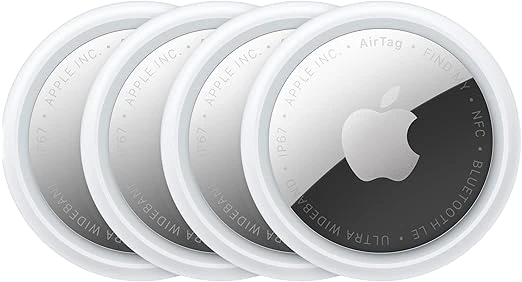
This Apple AirTag 2 review comes down to one question: is "noticeably faster" worth a fresh purchase? You know the feeling, you're already five minutes late, your keys are somewhere in the apartment, and you're doing that slow, humiliating walk-of-shame from room to room while the AirTag chirps from, apparently, inside the void.
The original AirTag changed how I lose things (for the better). The 2nd generation, which dropped in January 2026, makes finding them noticeably faster. Here's the honest breakdown.
What Changed in the Apple AirTag 2, and What Didn't
Apple made three meaningful upgrades. Everything else stayed the same.
1. The precision finding range practically doubled. Apple calls it "1.5×," which sounds like marketing math until you understand what it means. Precision Finding is the feature where your iPhone displays an on-screen arrow and distance readout that actively guides you to the tag. On AirTag 1, it kicked in at roughly 30 feet. On AirTag 2, it works from around 45 feet away.
Here's why that matters: if your bag is in a different row of a parking garage, or your keys slipped behind furniture in another room, the first gen would show you a Bluetooth ping, a sound, not a direction. The second gen starts guiding you before you even open the door. That's not incremental. That's a different experience.
2. The speaker is 50% louder. The original AirTag had a famously polite beep. The kind you'd miss if the TV was on. AirTag 2 is audible through a couch cushion, a tote bag, and a layer of moderate embarrassment. If you've ever pressed "Play Sound" and then had to get completely silent to locate the noise, you'll appreciate this immediately.

3. The Bluetooth chip has expanded range. This one's quieter but real. Your iPhone can now detect the AirTag, even without Precision Finding, from a meaningfully greater distance. Think of it as the difference between your phone knowing the tag is in the house vs. knowing it's on your block. Useful when you're trying to confirm your checked bag made the flight before you're even at baggage claim.
The form factor, battery (user-replaceable CR2032), and $29 price point are unchanged. Apple did not break what wasn't broken.
Who Should Buy the Apple AirTag 2 (and Who Should Wait)
The 4-pack at $99 is the move for most people, and here's the math: a single tag is $29, so you're saving $17 buying four. More practically, once you track one thing you immediately think of three more things you want to track. The bundle eliminates that creeping regret.
This is for you if:
- You're buying AirTags for the first time. Don't even consider the first gen, same price, strictly better hardware.
- You travel frequently and want tags on bags, a passport holder, and a laptop case.
- You have kids or a partner who "borrows" your stuff. (No judgment. Purely practical.)
- You're setting up a household and want one on the car keys, the remote you always lose, a backpack, and a bike.

The upgrade case for existing AirTag owners is more nuanced. If you actively use Precision Finding, meaning you've had the experience of your phone guiding you to your item, you'll notice the improvement. If your usage is mostly "I haven't seen my bag in three days, let me check the app," the upgrade is harder to justify on day one.
Key Features Worth Knowing
- Precision Finding at 1.5× range — the on-screen guiding arrow works from farther away, which is the whole point of owning one of these things
- 50% louder speaker — finally audible through a jacket pocket without asking everyone to stop talking
- Expanded Bluetooth detection range — your phone spots the tag sooner, even before you're close enough for directional guidance
- One-tap iPhone pairing — still the smoothest tracker setup experience on the market
- User-replaceable CR2032 battery — about a year of life, and swapping it costs $1 at any drugstore
Honest Take
AirTag 2 is an Apple ecosystem product. Full stop. iPhone users get the full experience, Precision Finding, the Find My network of hundreds of millions of devices passively helping locate your tag, and seamless notifications. Android users can use the NFC tap to see a lost-mode contact, but that's about it.
If your household is mixed iPhone/Android, the person with Android won't get much utility from tracking their own items.

Also worth saying: if you own the original AirTag and rarely use Precision Finding, the functional difference in your daily life will be small. The range and volume improvements are real, but they show up in edge cases, the moments when your stuff is actually lost, not just misplaced.
Is Apple AirTag 2 Worth It If You Already Have Gen 1?
It depends on how you actually use it. If you rely on Precision Finding, the on-screen arrow that guides you directly to your item, you'll notice the improvement immediately: the gen 2 activates from ~45 feet vs. ~30 feet on gen 1. If your usage is mostly checking the app to see where a bag was last seen, the day-to-day difference is minimal. The honest answer: wait for a sale on the 4-pack unless you lose things often enough to remember the last time Precision Finding saved you.
Verdict
If you're new to AirTags, the 4-pack 2nd generation is a no-brainer. Same price as the original, better hardware across every dimension that matters.
If you're upgrading from the first gen, wait for a sale on the 4-pack, the improvements are genuine, but they're not "replace them all this weekend" urgent unless you find things for a living.